Contents
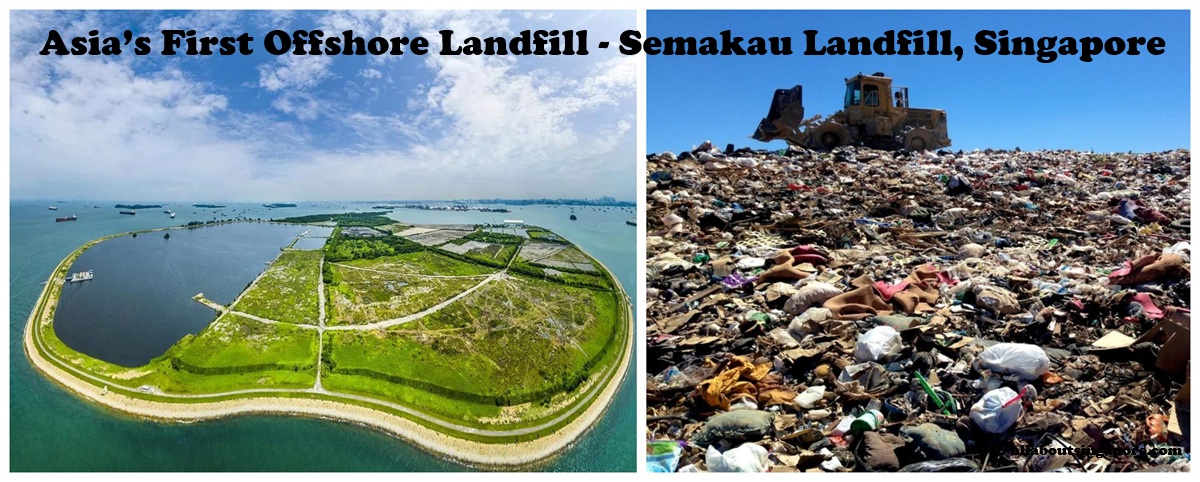
Semakau Landfill, situated off Singapore’s southern coast, is a renowned waste management facility recognized globally. As Asia’s first purpose-built offshore landfill, it is notable for its innovative design that effectively integrates environmental protection with the long-term waste management requirements of Singapore.
Semakau Landfill Contact Information
Address: Semakau Landfill
98 Tuas South Avenue 3
Singapore 637821
Phone: +65 6399 3623
Managing Agency — National Environment Agency (NEA)
Because Semakau Landfill is operated by the National Environment Agency (NEA), you can also contact NEA for enquiries, visits, or information:
NEA Main Office:
40 Scotts Road, Environment Building,
Singapore 228231
General NEA Contact: 1800-CALL NEA (1800-2255 632)
Email: contact_nea@nea.gov.sg
Key Features of Semakau Landfill
Unlike conventional landfills, Semakau Landfill is internationally admired for its eco-engineered design:
[su_list icon=”icon: check” icon_color=”#0dff9e”]
- A perimeter bund lined with clay and membrane to prevent leachate leakage
- Strict water quality monitoring to protect surrounding marine life
- Preservation of coral reefs and mangrove ecosystems
- Continuous environmental impact assessments
- These features allow the landfill to coexist with nature while safely managing waste. [/su_list]
Role in Singapore’s Waste Management System
Singapore employs an integrated waste management system where the majority of its waste is incinerated at waste-to-energy facilities, achieving a volume reduction of up to 90%. The residual ash and non-incinerable materials are subsequently transferred to Semakau Landfill. This system is designed to extend the lifespan of the landfill and minimize the environmental footprint associated with waste disposal.
Can the Public Visit Semakau Landfill?
Public access to Semakau Landfill is restricted. However, guided visits and educational tours are occasionally organised for schools, institutions, and environmental groups with prior approval. These visits focus on sustainability, waste reduction, and environmental conservation.
Importance of Semakau Landfill for Sustainability
Semakau Landfill reflects Singapore’s commitment to:
- Sustainable land use
- Environmental protection
- Waste reduction and recycling
- Long-term urban planning
**It also highlights the importance of the 3Rs – Reduce, Reuse, Recycle in extending the landfill’s operational lifespan.
What are the interesting facts about Semakau Landfill?
- It began operations in 1999
- Covers an area of around 350 hectares
- Designed to meet Singapore’s waste disposal needs for decades
- Often cited as a global model for sustainable landfill design.
Landfilling Process at Semakau Landfill, Singapore
The landfilling process at Semakau Landfill in Singapore is a meticulously designed system aimed at the safe management of the country’s waste. As Singapore’s sole landfill, it primarily accepts incineration ash and non-incinerable waste, and adheres to rigorous environmental controls throughout every phase of operations, ensuring the protection of the adjacent marine environment.
Step 1: Waste Reduction Through Incineration
Most of Singapore’s solid waste is treated at waste-to-energy incineration plants before being sent to Semakau Landfill. This treatment process effectively reduces waste volume by up to 90%, which significantly minimizes the quantity of material that ultimately goes to the landfill.
Step 2: Transportation to Semakau Landfill
The remaining incineration ash and bulky non-incinerable waste are conveyed via covered barges from the mainland to Semakau Landfill. This method of controlled transport is implemented to prevent spillage and reduce the risk of marine pollution.
Step 3: Disposal in Lined Cells
At Semakau, waste is deposited into engineered landfill cells that are:
- Lined with impermeable clay and synthetic membranes
- Designed to prevent leachate from entering the sea
- Constructed within a perimeter bund surrounding the landfill
- Each cell is filled in stages to ensure stability and environmental safety.
Step 4: Compaction and Daily Covering
Once deposited, waste is compacted to reduce air pockets and increase storage efficiency. It is then covered daily with suitable material to:
- Control odour
- Prevent pest infestation
- Reduce windblown debris
Step 5: Environmental Monitoring
Semakau Landfill follows a strict environmental monitoring programme, including:
- Regular water quality testing around the landfill
- Continuous monitoring of leachate systems
- Marine biodiversity assessments
- These measures ensure that nearby coral reefs and marine habitats remain protected.
Step 6: Progressive Cell Closure and Rehabilitation
When a landfill cell reaches its maximum capacity, it undergoes a sealing and capping process. Subsequently, the completed sections of the landfill are rehabilitated, promoting the regeneration of vegetation and natural ecosystems. This practice extends Semakau’s function as a model for sustainable landfilling, showcasing the potential for integrating waste management with environmental restoration.
Which Vehicles are used to Transport Waste at Semakau Landfill?
Covered Waste Barges
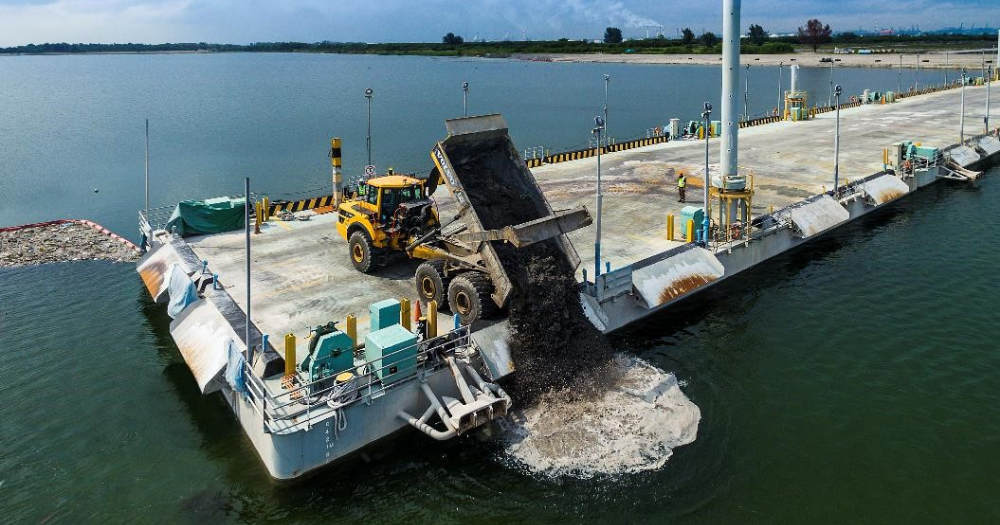
Incineration ash and non-incinerable waste generated in mainland Singapore are transported to Semakau Landfill using sealed and covered barges. This method is implemented to prevent spillage and protect against marine pollution during the transport process.
Vehicles Used Within Semakau Landfill
Once the waste arrives, the following specialised vehicles and machinery are used on-site:
- Dump Trucks: Carry ash and waste from the jetty to designated landfill cells
- Bulldozers: Spread and level waste evenly within landfill cells
- Landfill Compactors: Compact waste to reduce volume and increase storage capacity
- Excavators: Assist in cell preparation, waste handling, and covering operations
- Wheel Loaders: Move and manage cover materials and ash efficiently
How these Vehicles Support Safe Waste Management?
All vehicles used at Semakau Landfill are part of a controlled, environmentally managed system, ensuring:
- Minimal dust and odour
- Safe handling of incineration ash
- Protection of surrounding marine and island ecosystems.
Rate your experience with the Semakau Landfill, Singapore: (click on the stars below)
[yasr_visitor_votes]